Switching Stories (and Canoes) Midstream
Guest Post by Best-Selling Author Joseph Lewis
Besides sweat and angst, there is work and effort in writing. But you already know that. What I wanted to write about is changing canoes midstream, so to speak.
Stephen King, in his book On Writing, discusses how ideas for stories come together. He states that often, events occur that are seemingly unrelated, but they cause a question in the writer’s mind. A thread of an idea, perhaps.
Shortly after my book, Black Yéʼii (The Evil One), was published in January, I began working on another. The tentative title is Dead of Night, and it is inspired by my youngest daughter’s work with the homeless population. Emily Lewis-Sutton is a newly minted clinical social worker, and after several years working with adults and youth suffering from trauma, she went back to what and who she loves most. In two internships, she worked with her county’s homeless population and found that she thoroughly enjoyed it. In keeping with my genre, I set the homeless population against a thriller, crime, and mystery backdrop. It works out fine. I have seventy-nine pages written so far and over 20,000 words.
But then, something happened.
I read an article about how the Indigenous population, specifically, the Navajo Nation, was being swept up and detained by ICE on their own land. That floored me. I mean, if anyone was here in the United States first, it was the Indigenous people. But the DOJ has argued that Indigenous people don’t have birthright citizenship, and neither do their children. As a result, the Navajo and other Indigenous people were being detained in Phoenix.
“Despite possessing Certificates of Indian Blood (CIBs) and state-issued IDs, several individuals have been detained or questioned by ICE agents who do not recognize these documents as valid proof of citizenship,” the Navajo Nation Council stated in a press release. AZMirror, reported by Shondiin Silversmith, January 24, 2025.
More recently, Jose’ Olivares of The Guardian wrote on June 28, 2025, “…Fernando Diaz, was arrested by Huntington Park police after officers said they found a loaded gun and official-looking documents with Department of Homeland Security headings in his SUV … Officers were impounding his vehicle for parking in a handicapped zone when Diaz asked to retrieve items inside, the police said. Among the items seen by officers in the car were ‘multiple copies of passports not registered under the individual’s name’, NBC reports. Diaz was arrested for possession of the allegedly unregistered firearm and released on bail.”
A news conference was held, reported by NBC Los Angeles, where “Diaz also denied to the outlet that he had posed as an officer with border patrol or Immigration and Customs Enforcement (ICE). At the news conference, police showed reporters a paper they found inside his car with an official-looking US Customs and Border Protection header. The arrest is one of several cases involving people allegedly impersonating immigration officials, as the nationwide crackdown on undocumented immigrants intensifies.”
Anyone who has read one or more of my ten books knows I have several characters who are full-blooded Navajo. Taking Lives, a Prequel to the Lives Trilogy; the Lives Trilogy of Stolen Lives, Shattered Lives, and Splintered Lives; takes place in part on the Navajo Nation Reservation in Arizona. My book, Betrayed, is set on the Navajo Nation Reservation. Black Yéʼii (The Evil One) is a title derived from a Navajo spiritual belief, which is woven throughout the story. This story, more than any other, is thoroughly Navajo.
Those books are steeped in Navajo tradition, culture, and spirituality.
I’ve taken great pains to research and learn as much as I could before my fingers hit the keys on my laptop to write a story. Research is invaluable for the writer because readers are smart and can spot and then doubt what hasn’t been researched. The reader might not finish the book and probably won’t pick up another by that author.
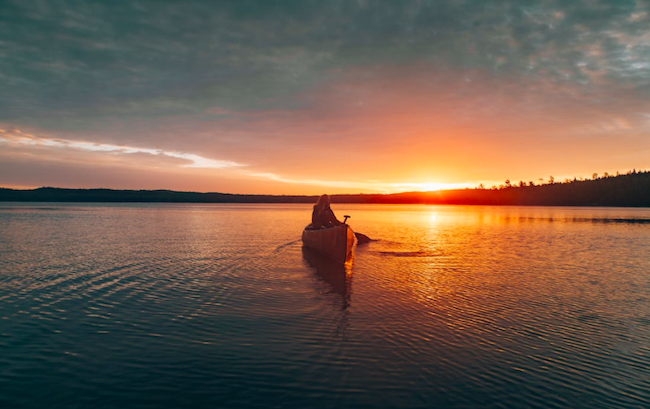
Then I switched canoes midstream.
I tentatively shelved ‘Dead of Night’ for a new book I am writing. I haven’t determined the title yet, but I bet you can see where I’m headed. George Tokay is a recurring character in my books. He is a seventeen-year-old boy who still has deeply rooted friendships on the reservation, despite being adopted and now living in Wisconsin.
What rattled around in my head after reading the two articles above and after listening to news reports are these questions: What would happen if George’s friends, including one of the Navajo elders, were rounded up and detained? And if so, by whom: real ICE agents or impostors? What would George and his brothers do if he couldn’t get hold of them? I found those questions too important and too juicy to ignore. In my humble opinion, there is a story there. A thriller-crime-mystery like the other ten I have written. And after all the research had been completed, I could not wait to open my laptop and begin writing it.
In short, never be afraid to switch canoes midstream.
You can always go back and finish what you started, but by failing to attack and research a new idea (a different canoe), you might lose the opportunity for good. That is a sad proposition. You would always ask yourself, What if …
If you are interested, you can find all ten of my books, including the ones mentioned in this article, on my website. I hope you check it out.
I would be remiss if I did not thank Kimberly Monaghan for the opportunity to write this guest post on Books Uplift. She has supported authors, especially me, and I sincerely appreciate it.
Joseph Lewis has been in education, either full-time or part-time, as a teacher, coach, counselor, and administrator for 48 years. He has authored nine books, earned approximately 20 awards, and released his tenth book, Black Yé’ii (The Evil One), a sequel of sorts to his book Caught in a Web, in January of 2025.
Image Courtesy of Pexels